

Specialized La Cornue Appliance Repair in San Francisco
Mon–Sat: 8:00 AM – 7:00 PM
A door that will not close properly, a seal that is flattened, or heat escaping from the edges: how to read the signs and what to check first.
Open and close a heavy oven door several times a week for years, and something eventually shifts. A La Cornue door is solid and carries real weight, so the hinges, the springs and the seal around the opening all work harder than on a lighter appliance. Owners tend to notice the problem through its side effects: food that cooks unevenly, a warm front panel, or a door that no longer shuts with a confident, even push.
A properly closed door presses against the gasket all the way round, holding heat inside the cavity and keeping the front of the range cooler. The hinges carry the door’s weight and keep it square to the frame, and a latch or catch holds it closed during cleaning modes where fitted. If the hinge tension, door alignment or gasket loses its shape, the seal opens at one edge first, usually at the bottom or the corner farthest from the hinge.
None of these is a reason to panic, but each one affects performance. A leaking door makes the oven run longer to hold its setting, which can mean longer preheats, uneven baking and more wear on the heating parts. Our article on La Cornue oven temperature uneven explains how leaks show up in baking results.
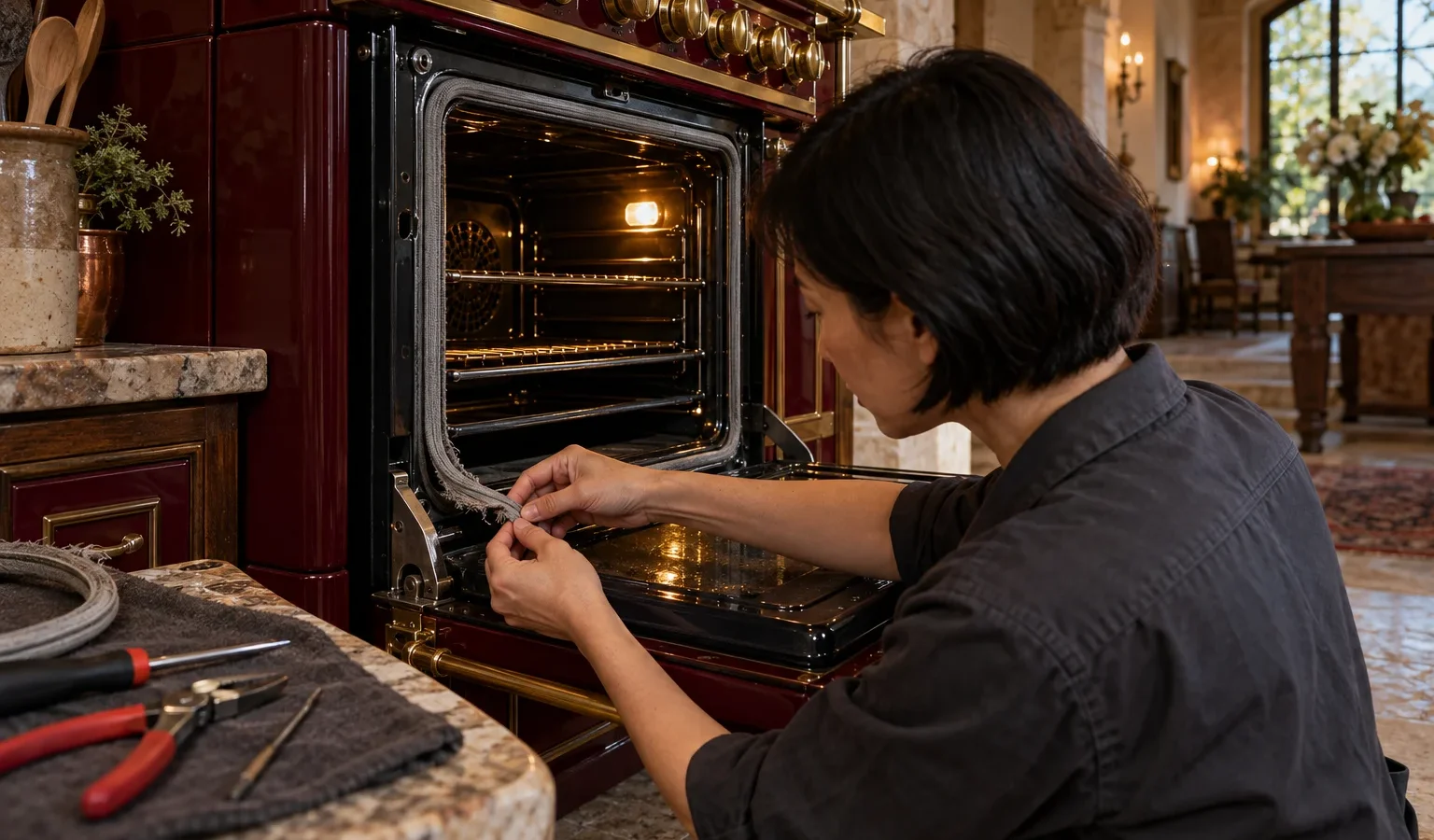
Gaskets age. Heat dries the material, cleaning products can attack it, and food residue can stiffen it so it no longer compresses evenly. A gasket that is merely dirty can often be cleaned; one that is flattened, torn or hardened needs replacement. Do not assume a gasket is the cause when the real problem is a misaligned door, because a new seal on a crooked door will leak just the same.
Because the door is heavy, hinge wear changes how it sits. A hinge spring that weakens lets the door drop open and slap against its stop. A hinge pin that wears lets the door twist slightly, closing hard on one edge. An oven that was moved during a remodel may also have shifted on its base, which pulls the door out of square with the opening. A range sitting off level on an uneven floor, which is common in older San Francisco houses, can produce the same effect with perfectly sound hinges.
Do not remove the door or take hinges apart yourself. The door is heavy, its springs are under tension, and a dropped door can injure you and chip the enamel or trim. Do not run the oven with a visibly damaged gasket for long stretches, and do not cover gaps with tape or foil. And never lean on or place weight on an open oven door, since it is not designed to take it.
Book a diagnosis if the door sags, will not latch, shows a gap, or the gasket is torn. A technician checks the hinges, springs, alignment and seal, tests whether the oven still holds its temperature, and gives a written estimate before any part is ordered. Nothing is repaired without your approval. Our La Cornue oven repair page explains how oven visits run, and the La Cornue ovens page covers the range lineup.
Door parts differ between Château sizes, CornuFé models and others, so the full model and serial plate saves a second trip. It is usually on the frame behind the oven door or behind a lower drawer. Compare notes with the Château 90 range or Château 150 range page if you want to confirm which series you own.
Homes with custom cabinetry around the range leave little tolerance, and a door that swings out of square can rub the cabinet. Hillside houses with sloping floors and kitchens that were rebuilt around a heavy range also see alignment drift. Tell us if the range has been moved or the floor has settled.
Look for tears, flat or hardened sections and gaps where the gasket no longer touches the frame. A gasket that stays clean but keeps leaking heat is usually past its useful life.
The hinges carry a heavy, spring-loaded door, so adjustment should be done by a technician who can support the door safely and protect the finish.
A weak seal or a door sitting out of square lets heat reach the front panel more than it should. It is a good reason to have the door checked.
Short term use is generally possible if the door still closes, but heat escapes and food cooks unevenly. Arrange a diagnosis rather than carrying on for months.
A damp soft cloth is enough. Strong cleaners and abrasive pads can stiffen or damage the seal and the enamel next to it.
Share a few details and we’ll confirm an appointment. Prefer to talk? Call us and we’ll help right away.