

Specialized La Cornue Appliance Repair in San Francisco
Mon–Sat: 8:00 AM – 7:00 PM
No power, no heat, or a display that stays blank: how to sort out what has failed in an electric oven cavity and what you can safely check yourself.
An electric oven that will not work is a different problem from a gas oven that will not light, because there is no flame to watch and no gas to smell. Everything depends on electricity reaching the right components in the right order. That is good news in one sense: the causes are fewer, and the first few checks take no tools at all.
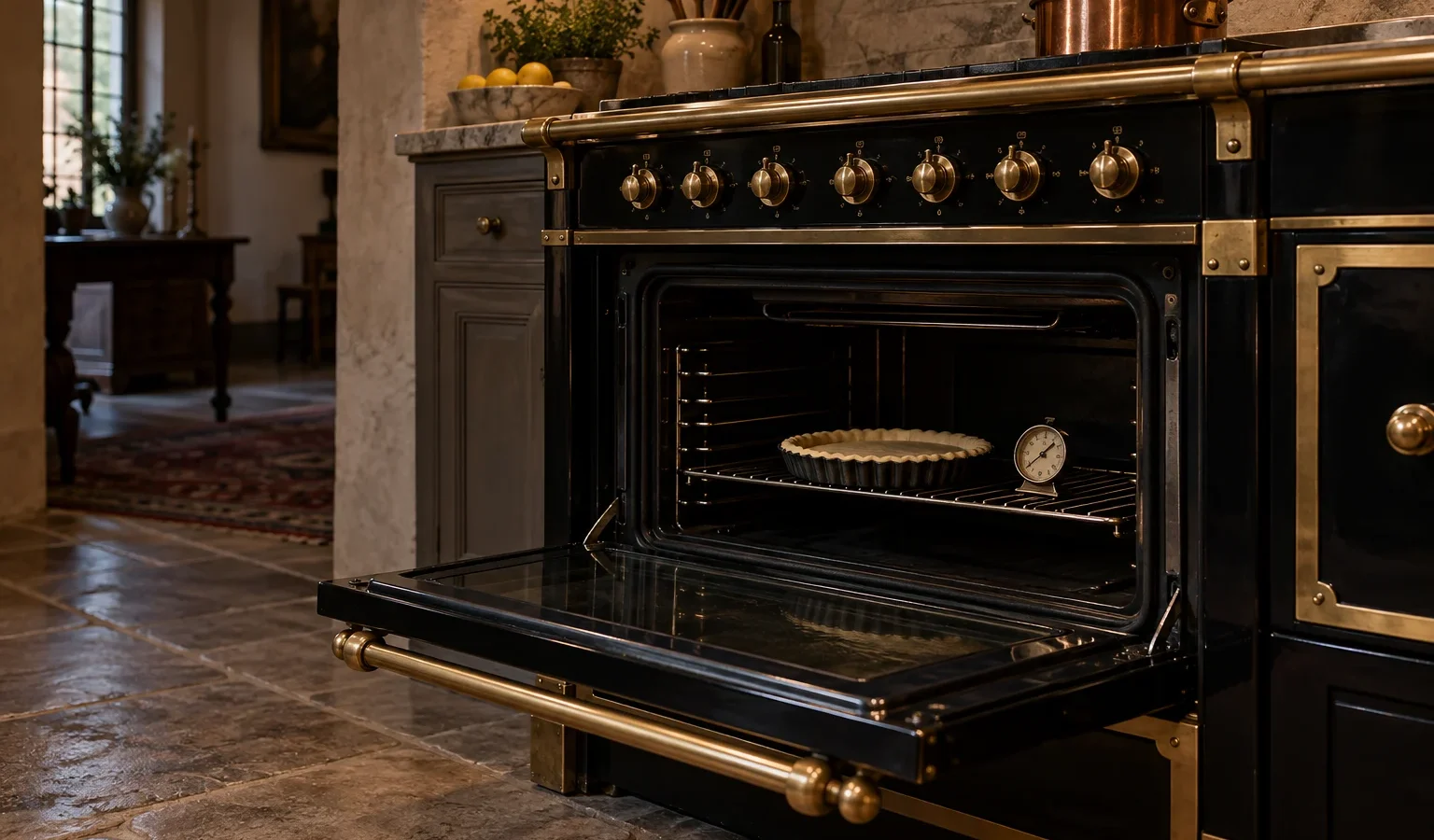
Some La Cornue ranges pair a gas cooktop with an electric oven, and dual fuel kitchens in Marin and on the Peninsula are common. Because the cooktop is gas, the range can seem fine while only the oven is dead, which sends owners hunting for a gas problem that does not exist. If your oven cavity is electric, the symptoms below apply to it, not to the gas burners above.
The display is dark and the oven makes no sound. This points toward supply: a tripped breaker, a loose connection at the supply, or a control board that is not powered. An electric oven usually has its own dedicated circuit, so also check whether it is the oven alone that is dead or the whole range.
The control has power but the elements are not heating. A relay, a thermal safety device, a sensor or the element itself may have failed. The cause sits between the controls and the element, and it needs testing with instruments, not guesses.
A safety device may be tripping early, a sensor may be reporting a false reading, or a connection may be overheating and opening. If you also notice a burning smell or sparks, switch the range off at the breaker and stop using it.
Many electric ovens use more than one element for baking, broiling or convection. If a function stops while others still work, a single element or selector path has failed rather than the whole oven.
If a breaker trips again right away, leave it off. A breaker that repeatedly trips on an oven circuit is reporting a fault such as a shorted element or damaged wiring. Resetting it again hides the cause and adds risk.
On a visit the technician confirms supply to the oven, checks the elements for continuity and visible damage, tests the door switch and the sensor, and looks at the relays and control board. The order matters, because replacing a board when the real fault is a failed element wastes time and parts. You see a written estimate before any work, and nothing is repaired without your approval.
Electric ovens need a properly sized dedicated circuit, and the range needs to be level and fully seated in its cabinetry. In older Bay Area houses the supply may have been altered over the years. A loose or worn connection at the supply, a circuit that is shared with another load, or a range that was pushed back and pinched its own cord can all create intermittent faults. Mention any recent electrical or remodel work when you book.
The hood also deserves a thought. If the hood and range share a circuit or were rewired together, a problem on one can show up on the other. Our La Cornue range hood repair page covers the hood side.
Think back to the moment the oven stopped. If it died in the middle of a cycle, a failing element or a thermal safety device is likely. If it failed right after a power cut or a storm, a control board or a tripped breaker moves up the list. If it stopped after a cleaning cycle, the door lock mechanism or a sensor may have been stressed by the heat. Giving the technician that story, along with what you heard and smelled, often saves a good part of the diagnosis.
If the checks above do not bring the oven back, request a diagnosis. Parts for these ranges are brand-specific, so the full model and serial plate is the most helpful thing to have ready. It is usually behind a lower door or drawer, or on the frame behind the oven door. Read about our La Cornue oven repair service, the La Cornue ovens we see, and, for a large Château with a wide cavity, the Château 150 range page. If the same range also has issues on top, the overview of La Cornue range repair ties everything together.
Not necessarily. A blank display usually means the control is not powered, which can be the breaker, a supply connection or the control board. Check the breaker first.
Different functions use different elements and selector paths. When one function fails and others work, the fault is often a single element, relay or switch rather than the whole oven.
It involves working inside the range with live wiring nearby, so leave it to a technician who will also check why the element failed.
Not always, but a breaker that trips repeatedly points to a fault. Leave it off and book a visit rather than resetting it again.
Yes. An electric oven cavity does not use gas, so a closed gas valve affects the cooktop but not the oven.
Share a few details and we’ll confirm an appointment. Prefer to talk? Call us and we’ll help right away.