

Specialized La Cornue Appliance Repair in San Francisco
Mon–Sat: 8:00 AM – 7:00 PM
A bulb that will not stay lit, a fan that groans or stops, or a noise that was not there last month. Here is how to tell harmless from serious.
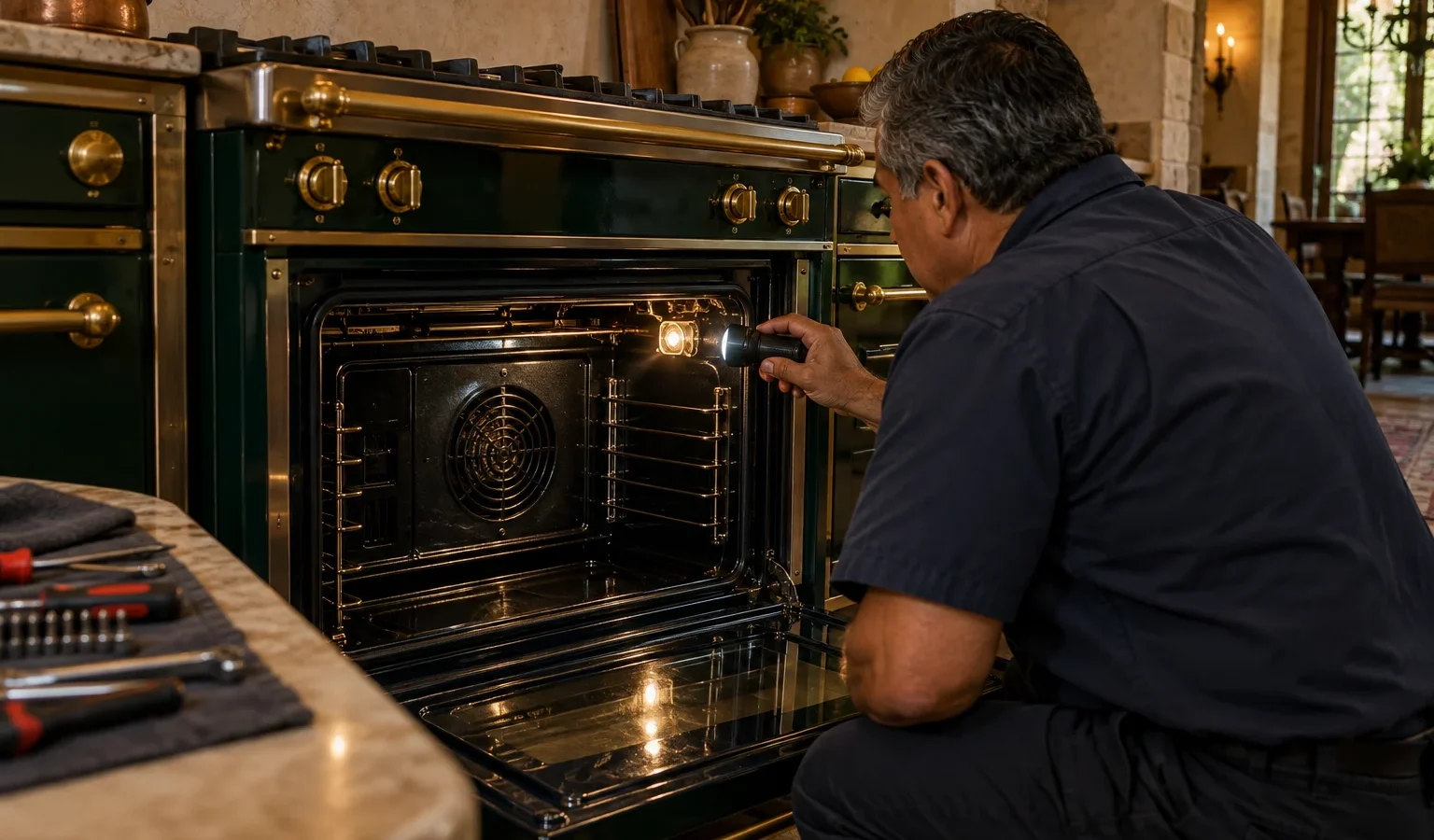
Two small things catch the eye in a busy kitchen: the oven light that no longer glows when you want to check a roast, and a fan that has started to whine, rattle or run when it should be quiet. They are different parts with different jobs, but owners often report them together because they sit in the same area and sometimes share a switch or a supply.
The oven light lets you check food without opening the door and losing heat. It is usually a high-temperature bulb behind a glass cover, switched by the control or by a door switch. The fan can be one of two things. A cooling fan moves air through the range body to protect the controls and keep the exterior cool. A convection fan, where fitted, moves air inside the cavity for more even baking. Neither is optional equipment; both protect the range and your cooking.
The usual cause is simply a spent bulb, but not every dark light is a bulb. A technician considers a short list:
Because the cavity is hot after use, never change a bulb while the oven is warm, and switch the range off at the breaker before touching the lamp. Use only a bulb specified for your model; ordinary household bulbs are not made for oven heat.
Fan symptoms fall into recognizable groups.
A grinding, whining or rattling sound often comes from a worn bearing, a blade out of balance, or something that has fallen into the fan housing. Light scraping can be as simple as a loose screw or a piece of foil.
A cooling fan that keeps running after the oven has cooled may be doing its job. If it never stops, a temperature sensor or control relay may be telling it to run. A fan that runs when the oven is off and cool deserves a diagnosis.
If a convection or cooling fan does not start, the motor may have failed, a connection may be loose, or the control may not be sending power. A cooling fan that does not run can cause the range to overheat, so this one should not wait.
A weak motor, a tired capacitor where one is used, or a build-up of grease on the blades can slow the fan and weaken airflow. That can show up as uneven baking or a hot control area.
A burning smell, smoke, or a fan that stops while the oven is hot means switch the range off at the breaker and stop using it.
Heat that is not carried away damages electronic controls and plastic components over time. In a kitchen where the range sits between custom cabinets with limited clearance, the fan matters even more. A fan problem that is caught early can mean a motor replacement; one left alone can mean a damaged control board. If you have also noticed La Cornue oven not heating symptoms, mention them, because a failing fan can cause the controls to shut the oven down to protect itself.
Ask for a diagnosis if the light stays dark after a correct bulb change, if the fan is noisy, runs constantly or does not run, or you notice heat in places that were cool. The technician checks the lamp circuit, the switch, the fan motor and the sensors, then gives a written estimate before any work. Nothing is repaired without your approval. Our La Cornue oven repair page describes the visit, and the La Cornue ovens page covers the lineup.
Have the full model and serial plate ready, usually on the frame behind the oven door or behind a lower drawer, since light and fan parts differ between series. A CornuFé such as the CornuFé 90 and a large Château like the Château 150 range do not share every component.
In older Bay Area homes with tight cabinet openings, heat builds up around the range more easily, and fans work harder. A remodel that changed the cabinetry or the hood can also change airflow around the range. Let the technician know if the surrounding space has changed since the range was installed.
No. Oven lamps are made to withstand cavity heat. Use only the type specified for your model, and fit it with the oven off, cool and the breaker switched off.
A cooling fan often runs on to remove residual heat. If it runs for a very long time or never stops, a sensor or relay may be at fault and worth checking.
Not immediately, but noise usually means a worn bearing or a loose part. Left alone it can fail and let the range overheat, so book a diagnosis.
Usually not, but a bulb change that does not fix it points to a switch or wiring fault, which is worth a technician’s look.
Yes. It moves air in the cavity, so a slow or stopped fan can cause uneven browning and longer cooking times.
Share a few details and we’ll confirm an appointment. Prefer to talk? Call us and we’ll help right away.