

Specialized La Cornue Appliance Repair in San Francisco
Mon–Sat: 8:00 AM – 7:00 PM
A flame should be steady and blue. Yellow tips, a lifting flame, or a burner that burns lopsided each point to a different cause.
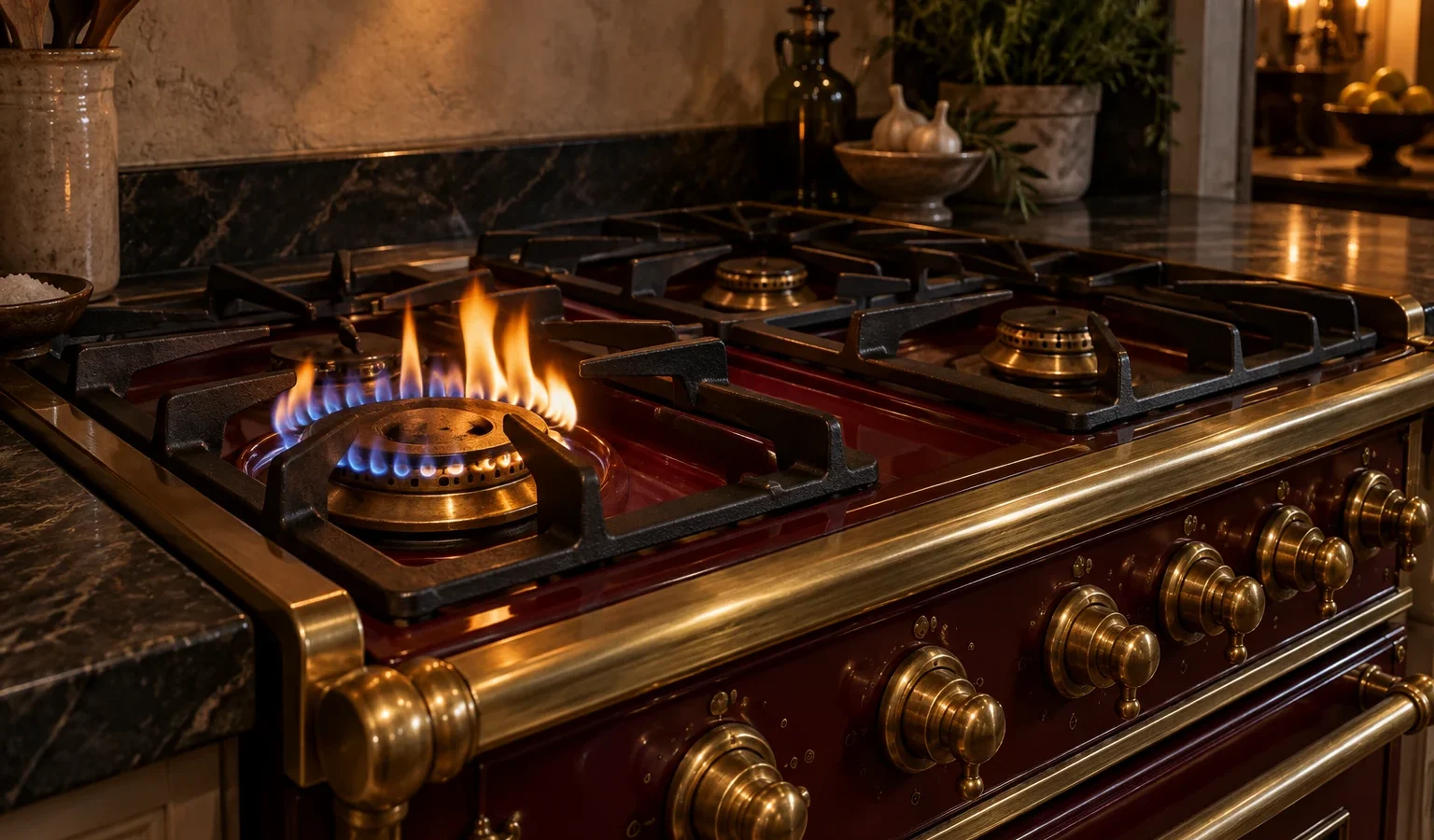
Look at a healthy burner and you will see a ring of small blue cones, evenly spaced and steady. When the flame turns yellow, flickers, lifts away from the burner or burns on one side only, the mix of gas and air has been disturbed. The cause is often simple, but a yellow flame in particular should not be ignored.
Grease, boiled-over food and cleaning residue collect in the tiny ports around the burner head. Blocked ports give gaps in the flame ring and uneven heating under the pan. Cleaning is often the whole fix.
A cap that sits crooked, backwards or in the wrong position directs the gas unevenly and produces one-sided flames. La Cornue burners are made with parts that fit their places, so check that each cap and head is back where it belongs.
Damp burner parts make a sputtering, yellowish flame until they dry. Wait and try again after drying thoroughly.
Each burner has an air intake that sets how much air mixes with the gas. If the mixture is wrong, the flame turns yellow. A change between natural gas and propane needs the burners and regulator set for that fuel. In wine-country homes on propane and city homes on natural gas, an incorrect conversion is a classic reason for a yellow, sooty flame.
Gas pressure that is too high or too low from the regulator or line changes the flame. Homes in the hills or with extended lines see this more often. Pressure checks are a technician’s job.
A valve or knob that does not turn through its full range can give a weak or uneven flame. See La Cornue rangetop knobs and valves for how the controls work.
If the flame is mostly yellow, smells, or leaves black marks on the pan, stop using that burner. Soot is a sign of incomplete combustion, and that can be a safety matter. If you smell gas, leave the room, avoid switches, and call the gas utility or 911 from outside.
A yellow flame can still boil water, which is why owners tolerate it for weeks. But the colour is the visible result of incomplete burning. It leaves carbon on cookware and on the trim around the burner, and it means the burner is not working as designed. Catching it early protects the brass, chrome and enamel around the top and keeps the kitchen air cleaner, especially in a house where the hood is not running during every meal.
If cleaning and reseating do not restore a blue, even flame, a technician can check the air mixture, the orifice for each burner, the regulator and the supply pressure, and confirm that the cooktop is set for the right fuel. This is where a written estimate matters: you will know what is being proposed before any part is ordered, and nothing is repaired without your approval. Our La Cornue rangetop repair page explains the process, and the La Cornue rangetops page covers the lineup.
Bring the model and serial plate to the conversation. It is usually under the front edge of the cooktop or behind a lower door. A Château 90 range and a Château 150 range have different burner layouts, and a CornuFé such as the CornuFé 110 uses its own parts, so the plate keeps the first visit productive.
If the yellow flame began after the range was moved, the gas line was altered, or the kitchen was renovated, say so when you book. Contractors set many ranges in the Bay Area, and a regulator or conversion kit left in the wrong state is a common cause. The same applies to a range that is not level, which can make a flame lean to one side.
A brief yellow tip after a spill is minor. A mostly yellow or sooty flame signals poor combustion and should be checked before further use.
Part of the burner is probably blocked or the cap is crooked. Clean the ports gently and reseat the cap.
Yes. If the burners are not set up for the fuel, the air and gas mix is wrong and the flame turns yellow or lifts.
No. Cleaning and reseating parts is fine, but adjusting air or gas settings is a technician’s job.
It usually points to too much gas or air, a misseated cap or unstable pressure. If cleaning does not help, book a diagnosis.
Share a few details and we’ll confirm an appointment. Prefer to talk? Call us and we’ll help right away.