
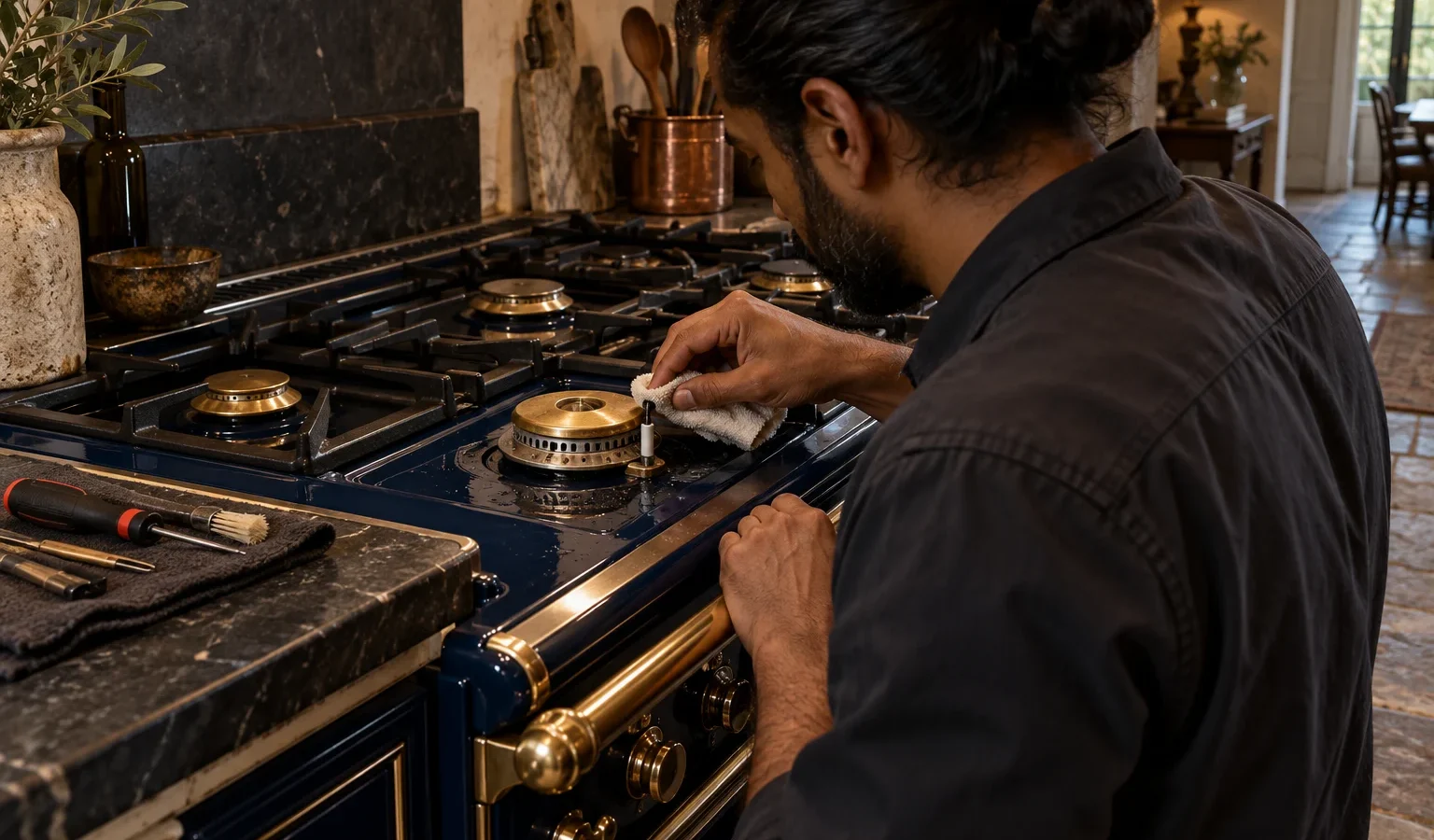

Specialized La Cornue Appliance Repair in San Francisco
Mon–Sat: 8:00 AM – 7:00 PM
The clicking will not stop, starts by itself, or carries on after the flame is lit. Learn what the ignition system is trying to tell you.
It begins quietly: a faint ticking from the cooktop while you are pouring a drink. It continues while the dishwasher runs. Or it will not stop after the flame is lit, speeding on even as a pot simmers. Constant clicking is irritating, but it is also a symptom worth understanding, because the spark system is designed to fire only when you ask it to.
When you push and turn a knob, a switch tells the spark module to fire. The module sends high-voltage pulses to the electrodes beside the burners, producing the familiar clicking sound until a flame is detected. When the flame is established, or the knob is released, the clicking stops. On many cooktops all the electrodes fire together when any knob is turned, which is why you hear clicking from burners you are not using.
Constant clicking means the module is being told, wrongly, that a burner needs ignition, or the spark is finding a path it should not, or the flame is not being sensed.
If the clicking starts by itself, the usual causes are:
Often a spill during cooking is followed by clicking that fades as the area dries. If it returns, something deeper is at work.
When the clicking continues after the burner is burning, the spark system is failing to realize the flame exists. It can happen when the electrode is coated or out of place and cannot sense the flame, when the burner cap is not seated and the flame is not reaching the electrode, or when the module itself is worn. A burner that keeps clicking beside a perfectly healthy flame is not dangerous in itself, but it is wearing the module and should not be ignored.
A single burner that clicks while the others do not often has a particular electrode or wire problem. A misseated cap can leave the flame lifting off the burner, so the electrode never touches it. In that case the clicking is the symptom and the cap is the cause. Our article on La Cornue burner won’t light covers burner head and cap seating in more detail.
If clicking persists with the breaker on and every knob off, you can leave the range off at the breaker while you wait for a visit. That stops the sparking, though it also stops the clock and any electric oven in the range.
A short burst of clicking after cleaning that fades as the cooktop dries is a nuisance. Clicking that arrives without cause, returns on dry days, or keeps going beside a lit flame is a fault. A useful habit is to note when it happens: after cooking, after cleaning, in damp weather, or at random. That pattern tells a technician whether to look first at moisture paths, at the knob switches, or at the module itself.
If you ever smell gas along with the clicking, leave the kitchen, avoid switches, and call the gas utility or 911 from outside.
Request a diagnosis if clicking returns after cleaning and drying, continues after the flame is lit, or begins without any burner on. The technician inspects the knob switches, wiring, electrodes and module, then gives a written estimate. Nothing is repaired without your approval. Visit the La Cornue rangetop repair page for how this work is done, and the La Cornue rangetops page for the lineup. Dual fuel owners with a CornuFé 90 should also note which fuel the cooktop uses, as that affects the diagnosis.
The model and serial plate is usually near the front edge of the cooktop or behind a lower door; have it to hand. Large cooktops, such as a Château 150 range, have more burners and more spark paths than a compact one.
San Francisco kitchens near the coast see damp air and fog, and a range in a lightly ventilated space may collect condensation around its electrodes. That can encourage nuisance clicking. Good hood use and dry cleaning habits help, but persistent clicking still needs a proper diagnosis.
Moisture, residue or a stuck switch can signal the spark module to fire. If it stops after drying, it was likely moisture; if it returns, book a diagnosis.
The spark itself is not a hazard if there is no gas leak, but it can ignite escaping gas. Treat any gas smell as an reason to leave and call from outside.
The system is not sensing the flame. A coated electrode, a misseated cap or a worn module are the usual reasons.
Yes, as a temporary measure. It also turns off other electrical functions of the range, so it is a pause rather than a fix.
Sometimes. Gentle wiping with a damp cloth on a cool cooktop clears residue, but if clicking persists the module or wiring needs testing.
Share a few details and we’ll confirm an appointment. Prefer to talk? Call us and we’ll help right away.