

Specialized La Cornue Appliance Repair in San Francisco
Mon–Sat: 8:00 AM – 7:00 PM
Routine care keeps a Château range looking and cooking as it should. Here is what to clean, what to leave alone, and which small changes are worth acting on early.
Owners tend to keep a Château range for a very long time, and its finish is part of the reason. The enamel, the brass, chrome or nickel trim and the heavy burners all respond well to a light, regular routine and badly to shortcuts. Most of the faults that reach us started as small neglect: a burner cap left damp, a spill baked onto an igniter, a door gasket allowed to harden. This guide covers what to do, what to avoid, and how to recognise a change that deserves attention. It talks about the Château series in general; the details of an individual model are on its own page.
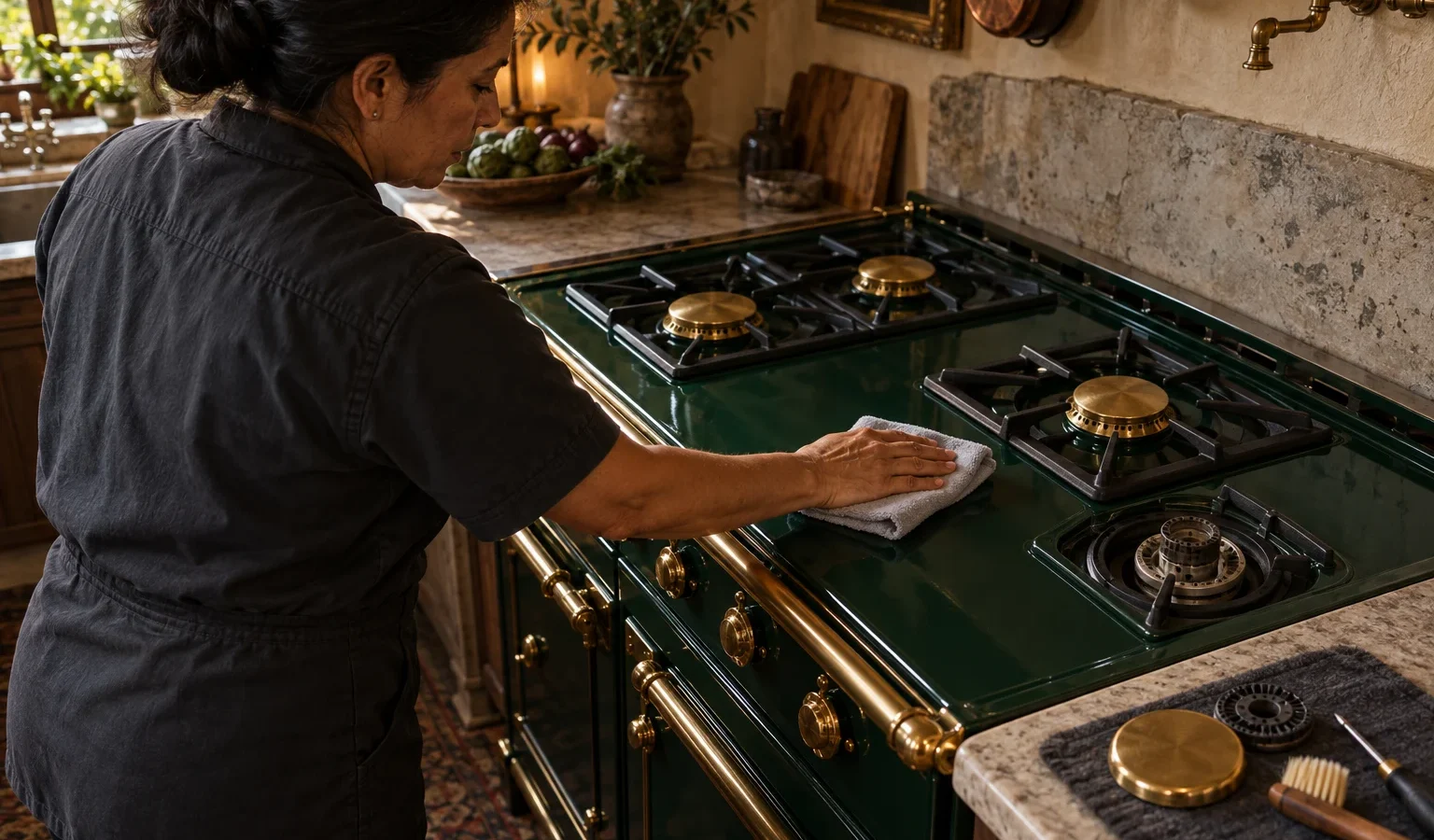
Wipe spills as soon as the surface is cool. Sugary and acidic spills are the ones that mark a finish, and anything that boils over and dries around a burner base will eventually reach the igniter and the ports. Use a soft cloth and warm water with a mild soap, rinse, and dry. For the oven, wipe the door and handle and leave the interior alone between proper cleans. If you have a house manager or cleaning crew, share this routine with them, because the most common damage comes from a well-meant product used once.
Enamel is hard but not indestructible. Abrasive pads, powders and harsh sprays can dull it or leave fine scratches, and a sharp knock from a heavy pan can chip it. Avoid putting cold water onto a very hot surface. If a chip appears, do not pick at it, and keep the area dry and clean until it can be assessed, since exposed metal beneath can become a problem in a damp coastal climate such as San Francisco, where salt air is a fact of life near the water.
Different trims age differently. Some owners enjoy a developing patina on unlacquered brass, while others polish it regularly; both are valid, but the product should suit the finish. Use a soft cloth, and avoid strong chemical polishes unless you know the trim can take them. Keep the knobs and rails dry, and wipe off fingerprints and cooking residue so they do not etch the surface. Do not apply polish around a knob stem where it can seep inside; that area needs to remain clean and dry. If the knobs begin to feel different, see La Cornue rangetop knobs and valves.
Burner caps and heads should be lifted off, cleaned and fully dried before they are put back, then seated flat so that the flame pattern is even. A cap that is not seated is the most common cause of a burner that clicks without lighting or burns unevenly. Do not use a pin or needle to clear ports unless a technician has told you it is acceptable for your burner; widening a port changes the flame. The igniter should be wiped gently with a barely damp cloth when cool, never soaked. For lighting faults, read La Cornue burner won’t light.
Check that the door closes squarely and that the gasket looks flexible and complete. A hardened, flattened or torn gasket lets heat out and can affect cooking results. Do not use abrasive cleaners near the gasket, and do not leave the door ajar for long periods to air the oven. If the door sticks or sags, see La Cornue oven door and gasket problems.
A burner that takes longer to light, a flame that has become uneven, an oven that takes longer to come to heat, a door that feels different, a hum or rattle that was not there before, or a faint odour. None of these is urgent on its own, but they are cheap to diagnose when caught early and expensive in comfort when ignored. A sharp smell of gas is different: leave the house, avoid switches, and call the gas utility or 911 from outside. Burning smells or sparks mean power off at the breaker.
Anything behind a panel, anything involving gas fittings, valves, igniters or electrical parts, and any adjustment of the oven thermostat or fan. Leave those alone, even if a video makes them look simple. A visit starts with diagnosis, comes with a written estimate, and no repair goes ahead without your approval. You can read how it runs on La Cornue range repair.
The Château name covers several series and sizes. The series pages for Château and Château Moderne cover the family in general terms, and the model pages, such as the Château 150 range, list the sizes. For a map of the whole lineup, see La Cornue ranges.
Second homes in Napa, Sonoma and the Peninsula often sit unused for weeks. Before a long absence, wipe the range, make sure nothing damp remains under burner caps, and close the gas shut-off valve to the range if that suits your routine. On return, open it again, lift a cap or two and look for dust before lighting.
A soft cloth with warm water and a mild soap, then rinse and dry. Avoid abrasive pads, powders and strong sprays that can dull or scratch the finish.
Yes, if the polish suits the finish and stays away from knob stems and openings. Some owners prefer to let unlacquered brass age naturally.
Lifting, cleaning and fully drying them weekly keeps flames even and igniters clear. Always reseat them flat.
It is an early sign of a dirty or damp igniter, a loose cap or a weak spark. It is worth checking before it turns into a burner that will not light.
Panels, gas fittings, valves, igniters, electrical parts and oven controls. A technician handles those after diagnosing the problem.
Share a few details and we’ll confirm an appointment. Prefer to talk? Call us and we’ll help right away.