

Specialized La Cornue Appliance Repair in San Francisco
Mon–Sat: 8:00 AM – 7:00 PM
A dual fuel range splits the work between gas and electricity, so a fault can sit on either side. Learn how to tell which side is at fault and what to check first.
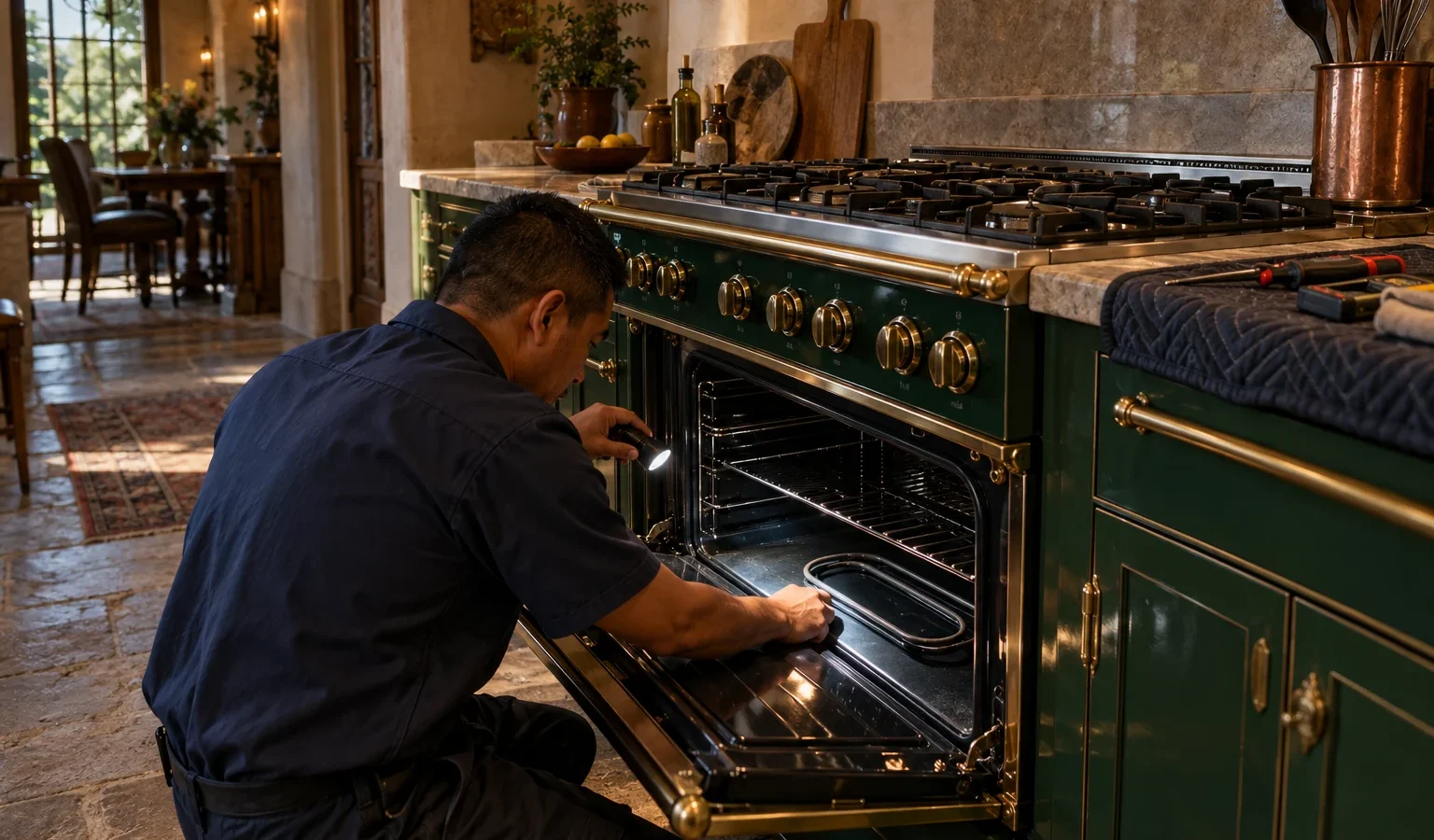
A dual fuel range combines a gas cooktop with an electric oven, a pairing many serious cooks prefer. It also means two supplies must both be healthy, and symptoms can be confusing: a range that “does nothing” may have lost its electricity while the gas is perfectly fine, and a cooktop that will not light may be a gas side problem that has nothing to do with the oven. The library lists the CornuFé 90 as available in gas, dual fuel or induction, so owners of that range should check which version they have.
This article separates the symptoms by side, then covers the shared pieces where the two halves meet.
Ask three questions. Do the burners light, even if the oven is dead? Does the oven heat, even if a burner is wrong? Do the clock, display and lights work? If the burners light with a spark but the oven is cold, the fault is likely on the oven side. If the oven heats but burners will not light, think gas, igniters and caps. If nothing responds, including the display, look at the power to the range first.
The typical suspects are a failed bake element, a faulty temperature sensor or thermostat, a control fault, or a supply that is not reaching the oven. An element that glows in some modes and not in others suggests a selector or control issue. See La Cornue electric oven not working for the full reading.
A weak convection fan, a worn door gasket or an element that has partly failed can all skew results. Level can matter too; see La Cornue oven temperature uneven.
Dual fuel ranges need a dedicated circuit sized for the load. If the breaker trips when the oven starts, the cause may be an element failing to ground, a wiring fault or an undersized circuit. Do not keep resetting it. Switch the range off, note when it tripped, and book a visit.
Dampness, a loose cap or a worn igniter are the usual causes. The clicking and lighting guides are La Cornue burner won’t light and La Cornue burner clicking constantly. Note that the spark needs electricity, so a total loss of power also stops the burners from lighting automatically.
Yellow or lazy flames can come from airflow problems at the burner or a mismatch between fuel and orifice, which matters on properties that run on propane or on a converted supply. See La Cornue burner flame yellow or uneven.
The electronic control and display coordinate both halves, so a control fault can mimic a fuel problem. Cooling fans, panel lights and the clock share the same supply. A momentary power interruption, common after storms and during utility work in hillside neighbourhoods, can leave a control confused. One controlled power reset, switching off at the breaker, waiting a little and restoring, is a fair check; do it once and write down what changed. Repeated resets hide the pattern the technician needs to see.
The first points are discussed in La Cornue range installation checks.
Do not open panels, test circuits or touch gas fittings. If you smell gas, leave, avoid switches, and call the gas utility or 911 from outside. If you notice a burning smell or sparks, switch off at the breaker.
If you look after a property on behalf of an owner, record which circuit feeds the range, where the gas shut-off valve is, and who installed the range. Many dual fuel ranges in Pacific Heights townhouses and Sonoma estates were set by contractors who are no longer on site. Having that information at hand speeds up the diagnosis, especially when the question is whether a fault belongs to the range or to the supply. Keep the oven door closed, avoid heavy loads on an open door, and report an unusual hum, click or smell early.
See which half still works. Burners lighting while the oven is cold points to the oven side; a working oven with dead burners points to the gas side.
Ignition needs electricity. When power is lost or the breaker trips, automatic lighting stops even though the gas supply is fine.
No. A repeated trip signals a real fault. Leave the range off and book a visit instead of resetting again and again.
Yes. The control coordinates both halves, so a fault there can mimic burner or oven problems. A technician tests each side separately.
The oven runs on electricity, but the cooktop is matched to natural gas or propane. A technician needs to know both the electrical and gas setup.
Share a few details and we’ll confirm an appointment. Prefer to talk? Call us and we’ll help right away.